If your bedtime routine and gear haven’t resolved your sleep problems, there may be something else that could be causing you to wake each and every morning feeling as if your head just hit the pillow — even though you spent a good eight hours in the sack. In fact, one of the biggest culprits of sleep deprivation is TMJ. In many cases, TMJ-related sleep problems are not just sleep issues — they’re dental and bite-related problems. That’s why TMJ treatment and dental sleep medicine are an important part of comprehensive dental care in Los Gatos, focusing on how your jaw, bite, and airway work together.
TMJ Can Be Complicated
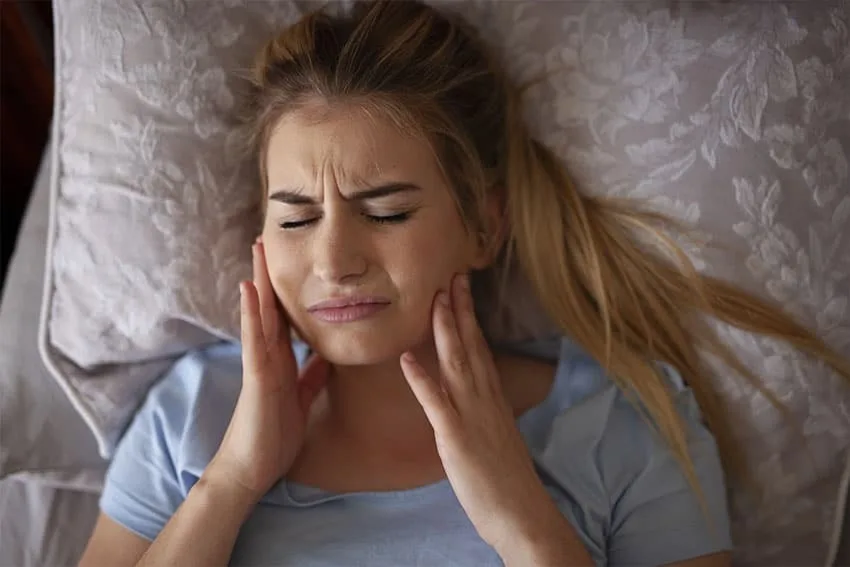
TMJ is a condition where your temporomandibular joint does not function properly. Caused by a misaligned bite, loose, missing, or damaged teeth, or a jaw injury, it can lead to nighttime teeth grinding or jaw clenching as your jaw joints and muscles struggle to find a comfortable, balanced position. TMJ can also cause snoring or sleep apnea. These are sleep disorders that can cause you to wake continually throughout the night, robbing you of the sleep you need to function during the day.
Because TMJ can affect both your bite and your airway, treatment often overlaps with dental sleep medicine. At our dental office in Los Gatos, TMJ treatment doesn’t just focus on joint pain — it also looks at breathing, sleep quality, and how your teeth and jaw function together.
Waking up tired is just one clue that a TMJ disorder may be an issue. Other symptoms include:
- Jaw, neck, face, or shoulder pain
- A clicking or popping sound in your jaw joint
- Dizziness
- Ringing in your ears
- Headaches or migraines
The Best Sleep Positions For TMJ
If you suffer from TMJ, simply changing your sleep position can make a huge difference in your TMJ symptoms and quality of sleep. Before thinking about your sleep position, evaluate your mattress and pillow situation. Your pillow should support your head and neck and align your spine. Your mattress should also feel comfortable to lay on in any position.
Stomach sleeping
Sleeping on your stomach is probably the worst position you can sleep in for TMJ. Sleeping on your stomach is bad for spine alignment and forces you to put pressure on your jaw. As a result, you’re more likely to clench or grind your teeth at night.
On your side
The second worst sleep position for TMJ is sleeping on your side with your hand under your head or pillow. This causes your head and neck to fall out of alignment which makes it more likely for your TMJ symptoms to flare up in the morning.
On your back
If you’re suffering from severe TMJ symptoms, sleeping on your back is your best bet. It keeps your head and neck in alignment which reduces your chance of clenching or grinding your teeth when you’re asleep. The one downside of sleeping on your back is that it makes you more likely to snore at night. Make sure to rule out any sleep disorders if you suffer from TMJ. Otherwise, you might require oral appliance therapy to correct both your TMJ and sleep apnea.
Treat Your TMJ and Get Back to Sleep
Sleep deprivation can cause serious problems. Tired people are more likely to make mistakes, have accidents, perform poorly at school or work, have relationship problems, or become depressed. By simply treating your TMJ, you’ll be able to get a restful night’s sleep once again. Our dentists can create an individualized treatment plan for your TMJ.
Do You Have TMJ?
If you suspect that TMJ may be robbing you of a good night’s sleep, visit our trained neuromuscular dentists. Reducing your TMJ pain and getting a better night of sleep is just a few appointments away. All it takes is a simple TMJ consultation at our Los Gatos dental office. Schedule a consultation by calling (408) 354-5600 today.
Ready to Schedule Your Visit?
Call (408) 403-5980 or request an appointment online.
Request an Appointment